
Website localization
Engage your audience like a local.
Bridging gaps
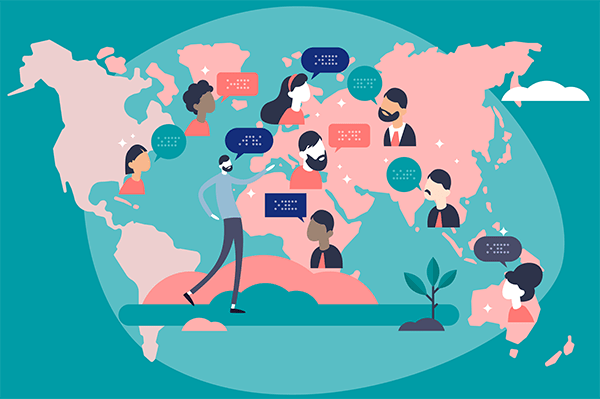
Language has the incredible power to connect people, but sometimes it takes more than words to provide the best customer experience (CX). To truly resonate with your users, your final product should look, sound and feel exactly like what they are accustomed to. However, this can vary greatly even within the same country.
When you need to reach diverse target audiences around the world, the insights of a native speaker are invaluable for effectively conveying your message. To expand your horizons, enhance experiences and foster customer loyalty, localization is essential.
Localization: more than just translation
Localization goes far beyond translation. It involves fully adapting cultural and non-textual elements to reflect the target culture in every detail.
Localized content extends beyond customer-facing materials and products. In global teams, it’s vital to ensure that everyone receives proper training and that operations meet the same standards across the board. Localization provides the perfect solution for tailoring your recruitment, training and e-learning content to specific markets. Moreover, it doesn’t go unnoticed – localization improves employee satisfaction and performance, ultimately benefiting your customers.




Why localization matters
Not localizing your texts would mean missing out on significant opportunities. Whether it’s your websites, market research surveys, mobile apps or software/UI, localization is essential. While translation and localization are sometimes used interchangeably, a successful campaign, platform or product launch relies on a complete adaptation to make it culturally relevant. That’s where localization comes in.
Here are just some of the benefits:
- Crafting content that truly resonates
- Bringing your teams together
- Gaining trust and brand loyalty
- Keeping customers coming back
- Increasing referrals to your business

Language and culture in sync
Language and culture are deeply intertwined, and Attached’s global network of language service professionals understands this connection. In addition to their extensive linguistic and industry knowledge, they stay up to date with the latest cultural trends. We speak your customer’s language in a way that is targeted and personalized, ensuring that your content truly resonates.
Our experts help define your localization needs and deliver customized content that generates results.




Why choose Attached
- Tailored solutions perfectly aligned with your specific needs and goals.
- A comprehensive service package to support your international growth and communication from A to Z.
- A dedicated team always ready to assist you, combining AI-powered tools with human expertise.
Questions & Answers
What is the difference between translation and localization?
The terms translation and localization are often used interchangeably. While the terms and processes indeed share similarities, understanding what sets them apart can do a lot to help you really reach your target audience.
Translation is the process of changing an original (source) language version of content into a different (target) language by substituting words in one language for those of another – in context.
Localization is a more specialized process of adapting your content and applications for regional – or local – consumption. It goes beyond translation by modifying the source language and other copy and design elements to appeal to local customers’ cultural preferences in their own target language.
Want to read more? Then check out this blog.
Is translation technology the same as Google Translate?
There are many different types of translation technology: machine translation (such as Google Translate), CAT (computer-assisted translation) tools, automated quality assurance tools, etc. So NO, translation technology is not the same as Google Translate.
With some types of technology, no human intervention takes place to do the work, whereas other tools merely assist human translators to do their work more efficiently and consistently.
Who will be working on my texts?
Great people! Our native professional translators, the majority of whom also work and live in the country of their native language.
By working with in-country linguists, we can follow the developments of the local language from the inside and ensure the use of current day wordings in our translations. Thanks to our advanced translation management system, we can easily connect with all our translators and copywriters across the globe and keep each other updated on the jobs we are working on.
It goes without saying that all new linguists who work for us are carefully screened and tested before they become part of the team.