
E-learning & Education Translation Services
Empower Learners Worldwide with professionally Relevant Content

Empower Learners Worldwide with professionally Relevant Content
In the world of e-learning and education, communication is more than just language. It’s about making sure learners feel connected, understood, and supported in their own cultural context and professional level. At Attached, we specialize in e-learning translation services that ensure your educational content is not only accurate but also culturally and professionally relevant and accessible.
From course translation to online learning localization, we help you engage global learners with localized, inclusive content that enhances retention and drives success.
E-learning and education translation services help universities, training providers, and global organizations translate and localize learning experiences so they feel natural, culturally relevant, and accessible in every market.
Typical e-learning translation deliverables include:
- Course modules, lessons, and downloadable study materials
- Learning management system (LMS) interfaces and navigation
- Video subtitles, dubbing scripts, and voiceover content
- Quizzes, exams, and assessment content
- Student onboarding and orientation materials
- Training manuals, research content, and internal documentation



What Are E-learning & Education Translation Services?
- Translation for learning content that needs clarity and accuracy (study materials, assessments, compliance training)
- Localization for learner experience (examples, visuals, terminology, tone, educational conventions)
- Transcreation for learning engagement (narration scripts, scenario-based learning, motivational messaging)
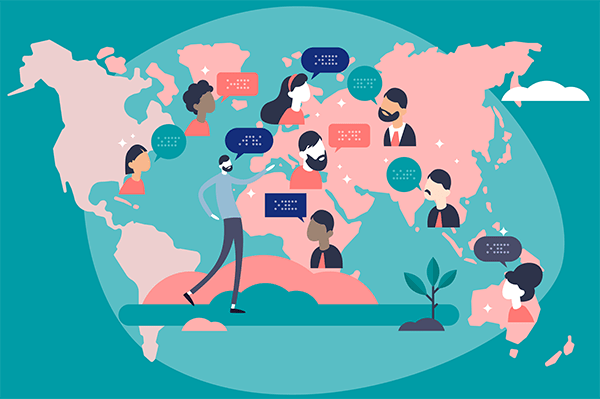
While translation simply converts text from one language to another, localization considers cultural, regional, and educational nuances. For example, certain examples, idioms, or visuals might need to be adapted to resonate with local learners, ensuring the material is both understandable and emotionally engaging.
Why Translation Alone Isn’t Enough in E-learning
In education, the stakes are high: learner confidence, completion rates, and performance depend on clarity and relevance. In education, translation isn’t just about words – it’s about connection. For content to truly engage learners, it must feel relevant to their cultural context. Here’s why:
- Cultural relevance: Adapting idioms, examples, and references is crucial to make the learning experience feel personalized and authentic.
- Accessibility: Every learner should be able to easily access and understand the material, regardless of their background or language.
- Engagement & retention: Studies show that learners are more likely to engage with content and retain information when it is presented in their native language and culturally relevant context.
For instance, a course may use different metaphors, visuals, or even teaching styles depending on the region. Translating this content to match local values is critical for long-term engagement and better knowledge retention.

The Benefits of Localized E-learning Programs
- Higher learner engagement and completion rates
- Better knowledge retention and improved outcomes
- Compliance with regional regulations, such as accessibility standards (e.g., WCAG)
- Global workforce enablement: Ensuring your teams are trained effectively, no matter where they are
- Inclusive learning environments that cater to diverse learning styles and needs
Localization is an investment in the future success of your learners and your brand, ensuring that every student, regardless of their location, feels included and supported.
What to Look for in an Education Translation Partner
- Educational expertise: linguists who understand teaching style, instructional design, and learner tone
- Cultural accuracy: localization of examples, idioms, and references by region
Consistency at scale: glossary and terminology management across courses and modules - Quality process: editorial review + QA checks to reduce errors in assessments and compliance content
- Accessibility awareness: alignment with accessibility standards where required (e.g., WCAG), including subtitles and structured content

Attached’s Expertise in Educational Translation
- Certified linguists with subject-matter expertise in education and training
- AI-supported subtitling, dubbing and voiceovers
- API workflows for fast content turnaround and seamless integration
Whether you’re localizing university courses, corporate training programs, or global onboarding materials, we provide expert translation and localization services to ensure consistency, accessibility, and engagement.

What We Translate in the E-learning & Education Space
- Course modules
- AI supported video subtitles & dubbing
- Learning management system (LMS) interfaces
- Quizzes, exams, and assessments
- Student onboarding & orientation materials
- Training manuals, research documents, and more
By translating and localizing all aspects of the e-learning experience, we ensure that learners have a seamless and effective educational journey, wherever they are.
Our Approach
- Native, subject-matter linguists for education and training
- Translation + editorial review + QA for accuracy and consistency
- Terminology management for course vocabulary and industry-specific language
- Localization of learner experience (examples, visuals, tone, and structure)
- AI-assisted subtitling and translation (when appropriate), always reviewed by specialists and aligned to your style guide

Tools That Ensure Consistency and Quality at Scale
- Translation memory for consistency across multiple translations
- CAT tools for efficient translation and quality control
- Glossary/terminology management to ensure subject-specific accuracy
- Attached AI Verification Suite to verify content accuracy and cultural relevance
By using these tools, we save you time and money while ensuring that all your content is consistently high quality across all regions.

Scale Your Global Learning Initiatives with Attached
- Improve learner engagement and completion rates
- Build an inclusive and accessible learning environment
- Ensure global consistency across all educational platforms




Why choose Attached
- Tailored solutions perfectly aligned with your specific needs and goals.
- A comprehensive service package to support your international growth and communication from A to Z.
- A dedicated team always ready to assist you, combining AI-powered tools with human expertise.
Frequently Asked Questions about Education Translation
What types of e-learning content do you translate?
We translate and localize course modules, LMS interfaces, quizzes and assessments, onboarding materials, training manuals, research content, and supporting documentation.
Do you provide subtitling, dubbing, and voiceover support for training videos?Do you provide subtitling, dubbing, and voiceover support for training videos?
We support AI-assisted subtitling, dubbing, and voiceovers, always reviewed by specialists to ensure accuracy, tone, and learner clarity.
Can you localize training content for different professional levels or learner audiences?
We adapt tone, terminology, and instructional style to match the learner’s level and regional expectations, improving comprehension and engagement.
How do you ensure consistency across multiple courses or global training programs?
We use translation memory, CAT tools, and glossary/terminology management to maintain consistent language across modules, courses, and training updates.
What is the difference between translation and localization?
The terms translation and localization are often used interchangeably. While the terms and processes indeed share similarities, understanding what sets them apart can do a lot to help you really reach your target audience.
Translation is the process of changing an original (source) language version of content into a different (target) language by substituting words in one language for those of another – in context.
Localization is a more specialized process of adapting your content and applications for regional – or local – consumption. It goes beyond translation by modifying the source language and other copy and design elements to appeal to local customers’ cultural preferences in their own target language.
Want to read more? Then check out this blog.
Is translation technology the same as Google Translate?
There are many different types of translation technology: machine translation (such as Google Translate), CAT (computer-assisted translation) tools, automated quality assurance tools, etc. So NO, translation technology is not the same as Google Translate.
With some types of technology, no human intervention takes place to do the work, whereas other tools merely assist human translators to do their work more efficiently and consistently.
Who will be working on my texts?
Great people! Our native professional translators, the majority of whom also work and live in the country of their native language.
By working with in-country linguists, we can follow the developments of the local language from the inside and ensure the use of current day wordings in our translations. Thanks to our advanced translation management system, we can easily connect with all our translators and copywriters across the globe and keep each other updated on the jobs we are working on.
It goes without saying that all new linguists who work for us are carefully screened and tested before they become part of the team.