
AI-assisted translation
Translate at the speed of AI, with the quality of human expertise. Attached helps you build an AI strategy that protects your brand and minimizes risk.
What is AI-assisted translation?
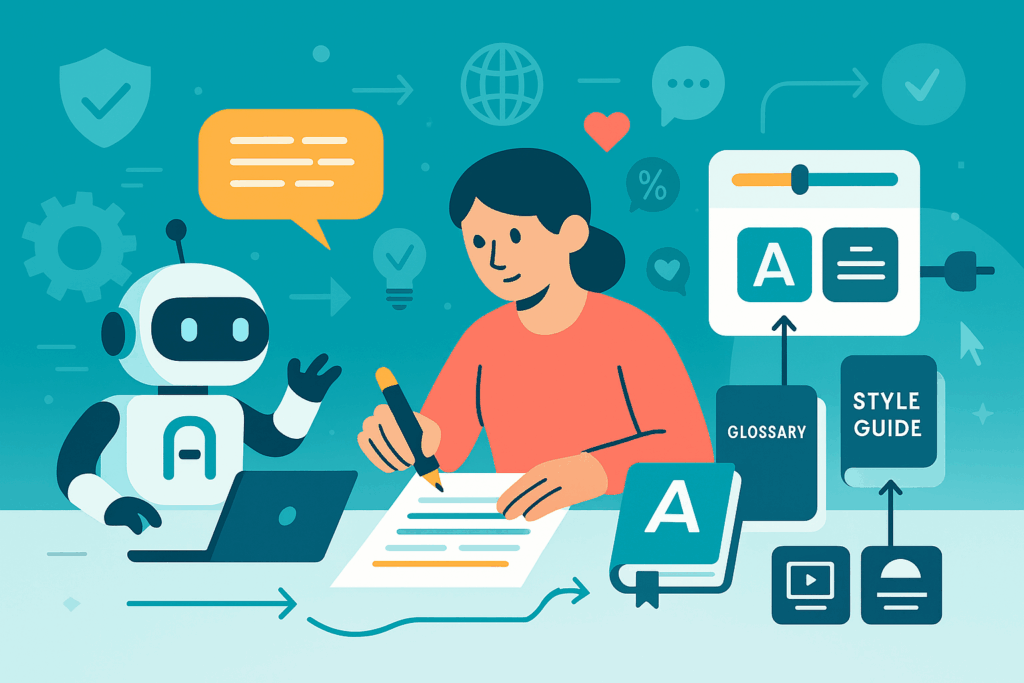
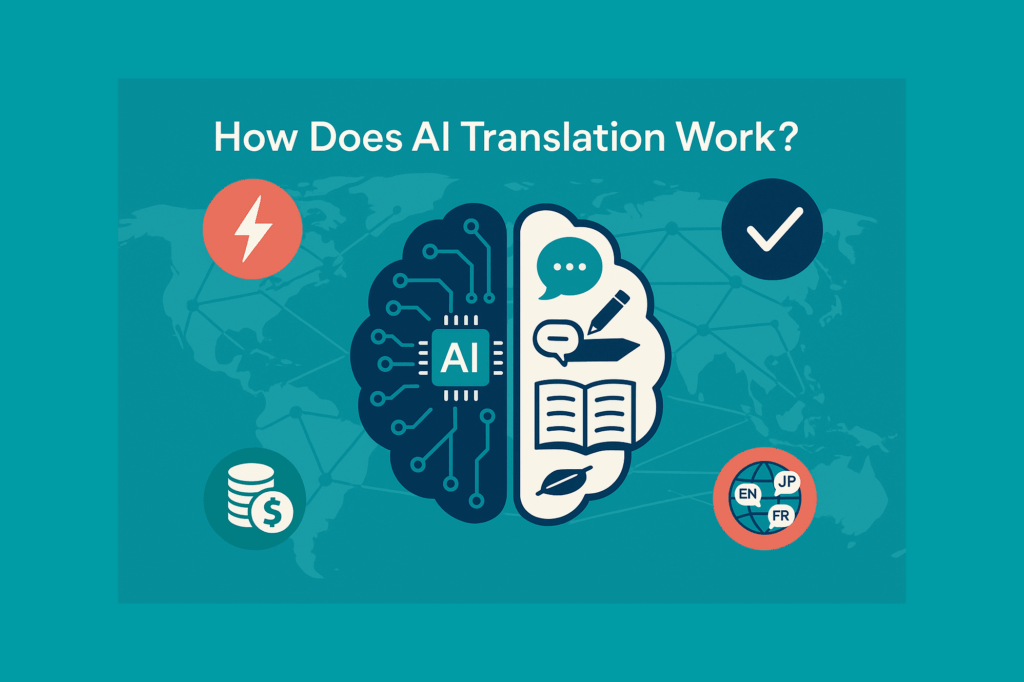
AI-assisted translation leverages artificial intelligence to make the translation process faster and more efficient. Today, many teams use tools like ChatGPT or DeepL to translate documents, internal communications, or even multilingual marketing campaigns. But this often leads to new questions: How accurate is the result? Is it safe to use for external content? Will the tone still sound like us? And most importantly: where should you start?
The truth is: AI alone is not enough. Apart from validation, it requires groundwork: setting up term bases, translation memories, glossaries, and style guides to define and protect your brand voice. Without these foundations, consistency and trust are easily lost.


Why AI-assisted translation needs careful choices
That does not mean every text requires post-editing. For content with minimal risk, limited exposure, or very low importance, raw specialized AI output can be a practical solution. For everything else, validation ensures the translation is safe, accurate, and brand-consistent. In short: smart organizations know that AI can be the answer — but only when used in the right way.
And there’s more at stake than accuracy alone. If an AI tool generates something that looks correct but is culturally inappropriate or biased, the reputational risk can be immense. Google’s Gemini, for example, misinterpreted the movie Babygirl by assuming that the CEO character was male when in fact she was female. This kind of gender bias can easily creep into AI output. Imagine similar errors appearing in your corporate communications or campaigns. It could harm trust, credibility, and your brand image. With professional validation, you protect yourself against these risks and ensure your content is safe to publish.
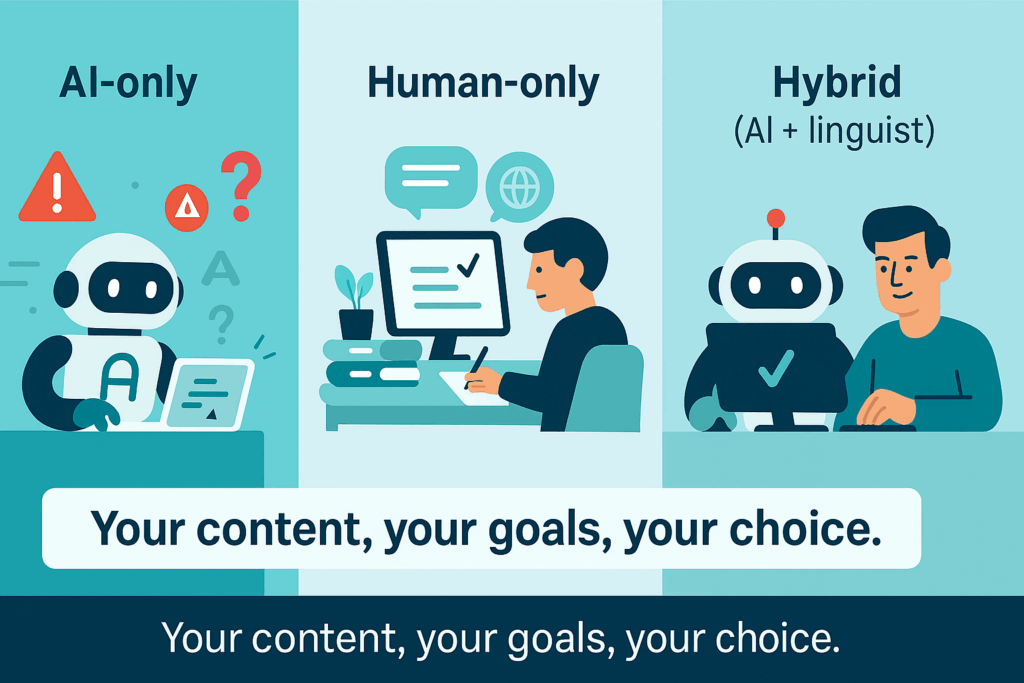
So, what are your translation options?
- AI-only: Raw machine translation without review. However, using raw AI translation with sensitive or specialized content can be risky. AI tools may hallucinate, invent, or misinterpret. AI raw is best reserved for low-risk, low-visibility texts.
- Human-only: Traditional translation by a professional agency. Often high quality, but certainly slower and probably requires a bigger investment. This approach is a great solution for highly sensitive and high-visibility content – not only facilitating understanding, but also turning your content into a global revenue driver.
- Hybrid (AI + linguist): In most cases, the best choice. AI delivers the first draft, and our linguists refine, validate, and align it with your brand, communication goal or target audience. This approach combines speed with accuracy — the best of both worlds.
At Attached, we do not simply use AI to get to a translation. We consider the bigger picture and determine the best approach for you. We examine your content, your business, and your goals. With our blend of human expertise (our global network of linguists) and deep knowledge of tools and workflows, we create solutions that are fast, efficient, and future-proof. That’s why we’re a long-term partner in your translation journey – not just a provider. You can expect personalized consultancy, transparent advice, and full control over your localization strategy.

When to use AI-assisted translation
AI-assisted translation is most effective when you need to process large volumes of content within a short timeframe. The type of text also plays a big role: is it highly specialized with complex terminology, or more general in nature? AI typically performs better on straightforward texts, in certain language combinations, and for broader, less segmented audiences. Suitable content can include internal communications, social media posts, product documentation, HR policies, and quick-turnaround updates.
For critical texts — like legal documents, contracts, or high-stakes marketing campaigns, human-led translation remains the safest route. The key is knowing how to balance both, based on risk and purpose. For a deeper dive into translation approaches and how to manage risks effectively, download our Risk Management Report (coming soon).
How do I maintain my brand voice using AI translation?

The right engine for every project
- Cleaning the source data
- Training the model with your terminology lists and translation memory
- Running test samples
- Evaluating output with hLepor, BERTScore and COMET scores
- Language Quality Assurance (LQA) by our experts
- Ranking engines based on quality, price and response time
This ensures that the technology behind your AI translation is never random or generic – it is carefully selected and tested to match your content and your goals.
Integrations and workflows that fit your business
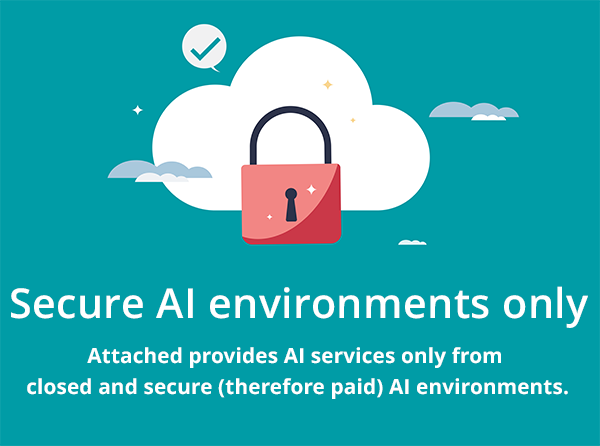
Quality, compliance and security

You are in control

Ready to get started with Attached?
AI-assisted translation doesn’t have to be complicated – or risky. With Attached as your partner, you’ll have the right mix of tools, expertise, and consultancy to make AI work for your brand. Whether you want to explore first steps, scale up existing processes, or redesign your entire translation strategy, we’re here to guide you.
Contact us to see how we can help you translate faster, safer, and smarter.


Why choose Attached
- Tailored solutions perfectly aligned with your specific needs and goals.
- A comprehensive service package to support your international growth and communication from A to Z.
- A dedicated team always ready to assist you, combining AI-powered tools with human expertise.
Questions & Answers
Can I just use ChatGPT for translations?
ChatGPT is one of the engines that can drive our AI Translation, but we don’t work inside ChatGPT itself. Instead, we use specialized translation systems. This has several advantages: we can safeguard terminology and translation memory, apply quality assurance tools, and deliver in the formats you need. For each project, we select the engine that is most suitable for the content, language combination, and purpose.
How do you make sure my brand voice is preserved?
Is my data safe?
Which types of content are best suited for AI-assisted translation?
General, high-volume texts with low-to-medium sensitivity – such as internal communications, product documentation, HR policies, and quick-turnaround updates – are ideal. Critical texts like contracts or brand campaigns are best handled with full human validation.
What languages do you support?
We cover a wide range of language combinations. Some pairs are better suited for AI-assisted workflows than others, and we’ll advise you on the best approach for your specific needs.