
Term Base - Glossaries
Empower terminology precision.

Consistent terminology
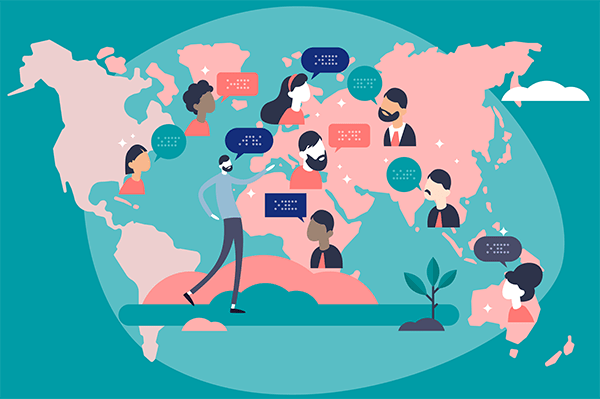
Communication is the heart of any business and we know how important it is to always get your communication message across clearly and consistently – regardless of language or culture. One of the key factors in this process is using the right terminology, and by using a term base (TB), that’s exactly what we can help you with.
What is a terminology list?
A terminology list, also called a glossary, contains all the important words and phrases used specifically for your company or industry. This may include product names, company-specific terms or forbidden words.
By entering your official glossary in a term base, we can ensure that only validated terms are used in your translations. This ensures the consistency and accuracy of your global communication.


Why use a terminology list?
Translating texts is not just about converting words from one language to another. It’s also about maintaining the meaning, tone and style of your message. That requires proper conventions for each language and that’s where a good glossary plays a crucial role.
For even better management of your content, we’re also happy to advise you on the use of a good translation memory.
Build a powerful global reach with Attached
Do you already have an internal glossary or would you like us to help you create one? Attached is here to support you. We first create a terminology list for you and then convert it into a term base in our translation environment. This way, the list is automatically included in the translation process.
Interested? Contact us today and find out how we can help you create an effective terminology list.
Translation API's en CMS-integratie
Door een Translation API toe te voegen aan je CMS kun je het vertaalproces volledig integreren in je contentworkflow. Zodra je dus nieuwe content aan je website toevoegt, kun je via de API meteen automatisch een vertaalopdracht plaatsen bij Attached. Onze veilige en betrouwbare omgeving zorgt er vervolgens voor dat de vertaalde content rechtstreeks naar je CMS wordt teruggestuurd. Aan jou de keuze om deze vervolgens meteen te plaatsen of eerst nog zelf een verificatiecheck uit te voeren!
Wij bieden integratiemogelijkheden aan met:
| ACTUM Digital | GitLab | PHP library/SDK |
| Adobe Commerce | Go library/SDK | Phrase Strings app for Contentful |
| Adobe Experience Manager (AEM) | Google Drive | Phrase TMS app for Contentful |
| Amazon S3 | Gridly | Plunet |
| Android SDK | Help Scout | Python library/SDK |
| Android Studio | HubSpot | Ruby library/SDK |
| ApSIC Xbench | iOS SDK | Salesforce Knowledge |
| Argos Multilingual | Java SDK | SFTP |
| Bitbucket | JavaScript SDK | Sitecore |
| Box | Jira | Sketch |
| Braze | Joomla! | Slack |
| CaptionHub | Kaleidoscope | Snowflake |
| CLI | ai | TransPDF |
| Contentstack | Kotlin library/SDK | TYPO3 |
| Dropbox | LBS Suite | Visual Studio |
| Drupal | Marketo | Webhooks |
| Figma | Microsoft Azure | WordPress |
| FTP | Microsoft OneDrive | XTRF |
| Gengo | Microsoft SharePoint | Zapier |
| GitHub | Paligo | Zendesk |


Veelgestelde vragen
Wat is het verschil tussen een vertaling en lokalisatie?
De termen vertaling en lokalisatie worden vaak door elkaar gebruikt. Hoewel de termen en processen inderdaad overeenkomsten kennen, kan juist inzicht in wat de twee onderscheidt enorm helpen om je doelgroep effectief te bereiken.
Vertaling is het proces waarbij een originele (bron)taalversie van een tekst – in context – wordt omgezet in een andere (doel)taal door het vervangen van de woorden van de ene taal door die van een andere taal.
Lokalisatie is een meer gespecialiseerd proces, waarbij uw content en applicaties worden gepersonaliseerd op regionale – of lokale – gebruiken. Het gaat verder dan vertaling doordat de brontaalversie en andere content- en ontwerpelementen worden aangepast op de culturele voorkeuren van een lokale doelgroep.
Is vertaaltechnologie hetzelfde als Google Translate?
Er zijn heel veel verschillende soorten vertaaltechnologieën: machinevertaling (zoals Google Translate), CAT-tools (computerondersteunde vertaling), geautomatiseerde kwaliteitsborgingstools, etc. Dus NEE, vertaaltechnologie is niet exact hetzelfde als Google Translate.
Bij sommige soorten technologieën wordt het werk gedaan zonder menselijke tussenkomst, terwijl andere tools menselijke vertalers enkel ondersteunen om zo efficiënter en consistenter te werken.
Wie gaat er aan mijn teksten werken?
Geweldige mensen! Onze professionele native vertalers, van wie de meerderheid ook in het land van hun moedertaal woont en werkt.
Door te werken met linguïsten uit het land zelf, kunnen we de ontwikkelingen van de lokale taal van binnenuit volgen en het gebruik van actuele bewoordingen in onze vertalingen garanderen. Dankzij ons geavanceerde vertaalmanagementsysteem kunnen we gemakkelijk contact leggen met al onze vertalers en copywriters over de hele wereld en elkaar goed op de hoogte houden van de opdrachten waaraan we werken.
Uiteraard worden alle nieuwe linguïsten die bij ons werken zorgvuldig gescreend en getest voordat ze deel kunnen uitmaken van het team.